
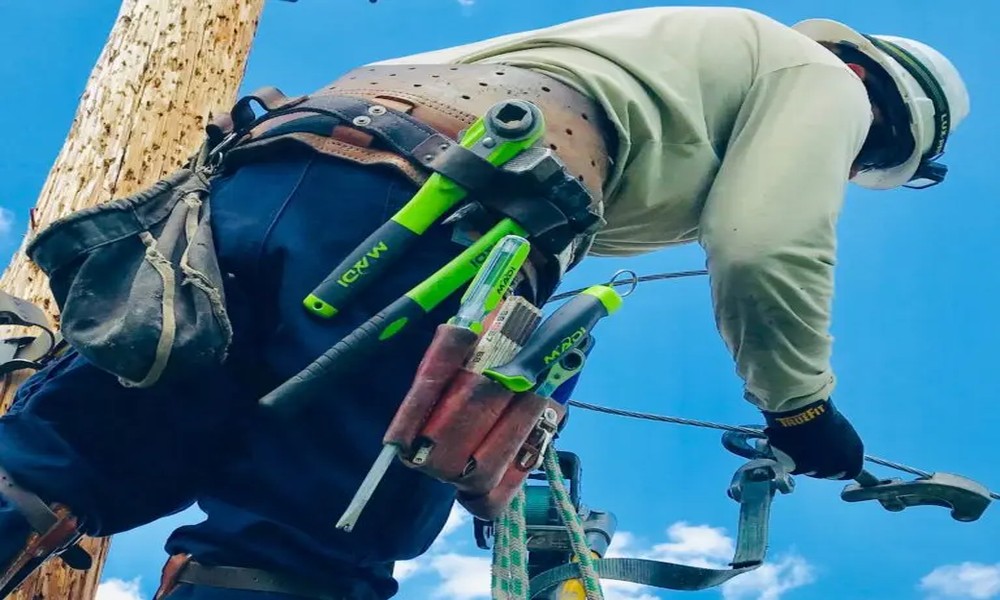
Listen, if you’re working the lines in Texas, you know two things are true: the sun is relentless, and your gear is the only thing standing between a productive day and a trip to the ER. Climbing a wooden pole or hovering in a bucket truck isn’t just a job; it’s a high-stakes athletic event. Whether you’re a greenhorn looking for your first lineman tool kit or a seasoned veteran updating your lineman supply, the weight on your belt matters just as much as the voltage on the line.
In this industry, we talk a lot about “toughing it out.” But here’s the cold, hard truth: your body isn’t made of steel, even if your lineman equipment is. Over time, the repetitive gripping, the heavy lifting, and the awkward positions take a toll. That’s where the science of ergonomics comes in. It’s not just a fancy buzzword; it’s the difference between retiring with a healthy back or spending your golden years scheduled for physical therapy.
The Anatomy of the Trade: Essential Hand Tools
Before we dive into the nuts and bolts of ergonomics, let’s talk shop. A lineman’s belt is like a mobile workshop. You’ve got your basics-the hand tools that feel like an extension of your own fingers. We’re talking about heavy-duty pliers (the “Kleins”), skinning knives, and wrenches that can take a beating.
But the real heavy hitters in the lineman gear world are the specialized items. Take the hot stick, for instance. Using an electrical hot stick allows you to maintain a safe “Minimum Approach Distance” while working on energized equipment. Then you’ve got the shotgun stick, essential for gripping and manipulating high-voltage components from a distance. These aren’t just lineman accessories; they are life-saving extensions of your reach.
Climbing High: A Comparison of Climber Materials
If you’re still “strapping on the irons,” the material of your climbers is a massive decision. It’s a balancing act between cost, weight, and how your knees feel at 4:00 PM.
|
Material |
Pros |
Cons |
Best For |
|---|---|---|---|
|
Steel |
Indestructible, Budget-friendly |
Heavy, can lead to leg fatigue |
Beginners on a budget |
|
Aluminum |
Lightweight, Rust-resistant |
More expensive than steel |
Daily climbers seeking balance |
|
Titanium |
Extremely light, High strength |
Expensive, hard to find |
Career veterans looking for max comfort |
|
Carbon Fiber |
Lightest available, Modern tech |
Very pricey, rigid feel |
High-end kits and weight reduction |
Choosing the right lineman equipment here is about career longevity. While steel is a classic, the repetitive strain of lifting heavy steel gaffs thousands of times a year adds up. Investing in aluminum or carbon fiber might bite the wallet now, but it saves your joints in the long run.
The Science of Staying Whole: What is Ergonomics?
You might hear “ergonomics” and think of office chairs, but in the utility world, it’s the science of “Human Factors Engineering.” It’s the study of designing lineman tools and tasks to fit the human body rather than forcing the body to fit the tool.
How Do Ergonomics Reduce Injury?
Think of your body like a rubber band. You can stretch it, twist it, and pull it occasionally without an issue. But if you keep it stretched to the limit for eight hours a day, eventually, it’s going to snap. Ergonomic design reduces injury by keeping your body in “neutral positions.” When lineman gear is designed well, it minimizes the force you have to apply and reduces the awkward reaches that cause micro-tears in your muscles and tendons.
What is the Science of Equipment Design?
Designers look at “operator fatigue” as a mechanical failure. To prevent it, they focus on:
- Center of Gravity: Ensuring a shotgun stick is balanced so it doesn’t feel “nose-heavy.”
- Vibration Dampening: Using materials in hand tools that absorb shock rather than passing it into your elbow.
- Mechanical Advantage: Designing ratcheting wrenches that do 60% of the work so your wrist doesn’t have to.
Ergonomic Risk Factors: The Silent Killers
In the field, we usually worry about the “Big One”-the arc flash or the fall. But the “silent killers” are the ergonomic risk factors that wear you down over a decade.
1. Force: Grabbing a pair of old, stiff pliers and squeezing with all your might.
2. Repetition: Doing the same crimping motion 200 times in a shift.
3. Posture: Overextending your shoulder to reach a primary wire.
4. Compression: Having a heavy tool belt dig into your hips, pinching nerves and restricting blood flow.
Selecting the Right Lineman Tool Kit
When you’re browsing a lineman supply catalog, don’t just look at the price tag. Look at the handles. Are they cushioned? Is the grip wide enough to distribute pressure across your palm?
Ergonomic Considerations for Hand Tools
- Handle Diameter: If a handle is too small, you have to grip harder (more force). If it’s too big, you lose control.
- Texturing: You want a grip that stays put even when your gloves are soaked in hydraulic fluid or sweat.
- Weight Distribution: A well-balanced electrical hot stick feels lighter than it actually is, reducing the strain on your lower back.
The Real-World Impact: Staying in the Game
Studies show that musculoskeletal disorders (MSDs) are the leading cause of lost time for utility workers. It’s not just about “being soft.” It’s about being smart. Using a modern lineman tool kit with ratcheting cutters and lightweight composites isn’t “cheating”-it’s ensuring you can still play catch with your kids on the weekend.
Think of your lineman accessories as an investment in your most important asset: your body. A $200 pair of ergonomic pliers is a lot cheaper than carpal tunnel surgery.
Conclusion
At the end of the day, being a lineman is one of the toughest, most rewarding jobs in the Great State of Texas (or anywhere else for that matter). But you don’t have to punish your body to prove your worth. By choosing the right lineman tools, opting for lighter lineman equipment, and understanding the ergonomic risks of the job, you can stay powerful on the pole for decades. Don’t just work hard-work smart. Keep your sticks hot, your gaffs sharp, and your gear light.
Frequently Asked Questions
1. Why should I spend more on carbon fiber climbers?
Carbon fiber is significantly lighter than steel. Over a 10-hour day, that weight reduction reduces the strain on your hip flexors and lower back, potentially extending your climbing career by years.
2. Are “ergonomic” hand tools actually different, or is it just marketing?
They are truly different. They often feature curved handles to keep your wrist straight and specialized pivot points that increase cutting power with less manual squeeze.
3. What is the best way to organize a lineman tool kit for ergonomics?
Keep your most-used hand tools toward the front of your belt or in a high-reach bag. This prevents “trunk twisting,” which is a major cause of lower back injuries.
4. How often should I replace my hot stick?
While not strictly an ergonomic choice, you should inspect your electrical hot stick daily for cracks or “tracking.” However, newer models are often made of lighter, more durable fiberglass composites that are easier on the shoulders.
5. Does tool weight really matter if I’m in a bucket?
Absolutely. Even in a bucket, you are often reaching overhead. Holding a heavy tool at arm’s length creates a “lever effect” that puts immense pressure on your rotator cuff. Lightweight lineman gear is always the better choice.