
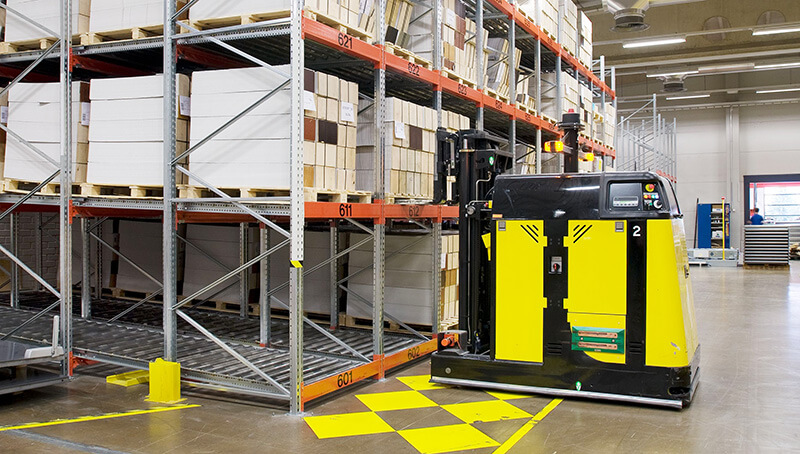
When you talk about warehouse racking by NTL Storage, you’re not discussing some abstract concept of industrial furniture but rather the brutal architecture of modern commerce, the steel backbone that keeps inventory off the floor and businesses from drowning in their own success. This is the warehouse game stripped bare, no nonsense, no sentiment, just cold steel reaching toward the ceiling because floor space costs money and vertical space is there for the taking.
The Raw Truth About Storage
Listen, the warehouse floor is a battlefield. You’ve got goods coming in faster than you can process them, clients screaming for fulfilment, and every square metre of that concrete slab bleeding cash from your operating budget. You need systems that work, not pretty solutions that look good in catalogues but buckle under real-world punishment.
Warehouse racking isn’t poetry. It’s pure function. Steel uprights bolted to the floor. Beams locked between them. Pallets stacked high. That’s the game. But get it wrong and you’re looking at collapsed inventory, injured workers, and a business that’s circling the drain before you can say restructuring.
The operators who survive in Singapore’s cutthroat logistics sector understand this viscerally. They know that warehouse racking by NTL Storage and similar systems represent not optional upgrades but fundamental infrastructure, as essential as the roof overhead and the forklifts on the floor.
The Components That Matter
Strip away the sales talk and you’re left with basic elements that either perform or fail:
Upright Frames
Vertical columns that take the punishment. These better be engineered right because they’re holding tonnes of inventory above your workers’ heads. Cold-rolled steel, proper gauge thickness, connections that won’t tear out under stress.
Load Beams
Horizontal spans that carry the weight. These aren’t decorative. They’re load-bearing members that must resist deflection, must hold firm when forklifts slam pallets down, must keep performing shift after shift, year after year.
Bracing
The diagonal steel that prevents lateral collapse. Miss this or damage it and your whole system becomes unstable. It’s the difference between a structure and a disaster waiting to happen.
Safety Components
Column guards, beam locks, load markers. Some operators view these as optional extras. Wrong. Dead wrong. These are the elements that prevent catastrophe when everything else goes sideways.
Singapore’s warehouse racking by NTL Storage installations demonstrate what happens when you specify properly and maintain rigorously. They endure. They perform. They don’t fail when you need them most.
The Singapore Crucible
You want to understand warehouse storage under pressure? Look at Singapore. An island smaller than New York City trying to serve as a global logistics hub. Land that costs more per square metre than most people earn in a month. Regulations that don’t tolerate failure. Competition from Malaysia, Indonesia, and every other regional player trying to steal market share.
This environment forges solutions. You can’t waste space. You can’t accept downtime. You can’t tolerate systems that fail. The warehouse racking solutions that survive here have been tested in ways that softer markets never demand. They’re battle-tested, proven under fire, refined through years of punishing use.
NTL Storage operates in this crucible, where inadequate systems get exposed fast and second-rate solutions don’t make it past the first year. The systems that persist do so because they work, because they’re properly engineered, because they deliver what operations actually need rather than what sales brochures promise.
The Real Cost Calculation
Here’s what nobody tells you about cheap warehouse racking: it’s expensive. Not upfront, but over time. The beams that sag after two years. The uprights that develop stress cracks. The connections that loosen and require constant retightening. The inevitable collapse that destroys inventory and possibly injures workers.
Smart operators understand this. They calculate total cost of ownership, not just purchase price. They factor in maintenance, longevity, and the cost of downtime when inadequate systems fail. The numbers tell a brutal story: proper specification upfront costs less than multiple repairs and eventual replacement.
Warehouse racking by NTL Storage represents this longer-term thinking, systems designed for sustained performance rather than minimum initial investment. It’s the difference between operators who survive and those who don’t.
The Safety Imperative
Let’s be blunt about something: warehouse rack failures kill people. Not often, but when they happen, the results are catastrophic. Tonnes of inventory crashing down. Workers crushed. Operations shut down. Investigations. Lawsuits. Companies destroyed.
This isn’t hypothetical. It happens. Singapore’s workplace safety records document these incidents. The common threads? Overloading beyond capacity. Damaged components left unrepaired. Inadequate inspection protocols. Cost-cutting that sacrificed safety for short-term savings.
The operators who avoid these disasters share characteristics: they specify properly, they maintain rigorously, they train their people, and they never, ever compromise on load limits. They understand that warehouse racking systems have tolerances that must be respected, not suggestions that can be ignored.
The Bottom Line
The warehouse storage game is unforgiving. You need systems that perform under pressure, that resist the daily punishment of loading and unloading, that maintain structural integrity year after year. You need infrastructure that protects your workers, preserves your inventory, and enables the operational efficiency that separates winners from losers.
This is what separates adequate systems from failures waiting to happen. This is why experienced operators in Singapore’s demanding logistics sector choose proven solutions over cheap alternatives. This is why warehouse racking by NTL Storage and similar quality systems dominate facilities that actually perform rather than simply exist, warehouses that thrive rather than merely survive in one of the world’s most competitive industrial environments.